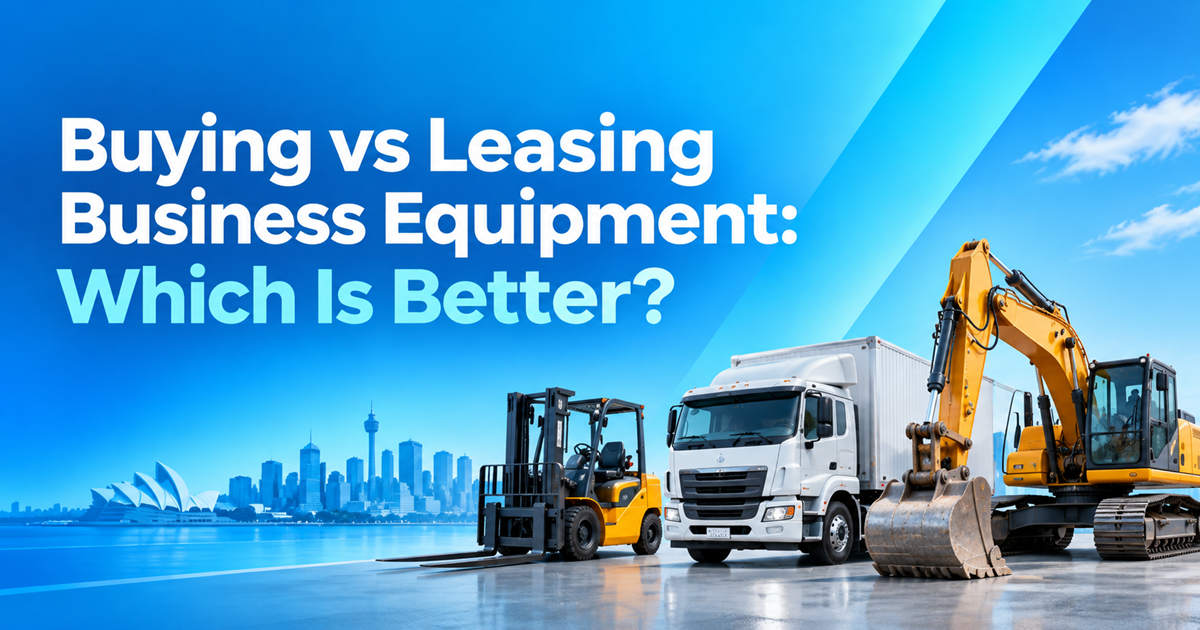
Buying vs Leasing Business Equipment: Which Option Makes Sense for Your Business?
Whether you're a tradie upgrading your tools, a construction business purchasing machinery or a café owner replacing kitchen equipment, choosing how to fund your business assets is an important financial decision.
Understanding the differences can help you choose a finance structure that suits your business.
What Is the Difference Between Buying and Leasing Business Equipment?
Buying equipment involves purchasing an asset outright or using finance to fund the purchase. Leasing involves paying for the use of equipment over an agreed period.
Both options have advantages and limitations depending on your business circumstances.
When Does Buying Business Equipment Make Sense?
Purchasing equipment may be suitable when your business expects to use the same asset for several years.
For example, a construction company using an excavator regularly may prefer ownership if the machinery is expected to remain productive over its useful life.
Benefits of Buying Equipment
- Ownership of the business asset.
- Greater control over how the equipment is used.
- Potential resale value.
- Flexibility to retain equipment after finance obligations are completed.
- Potential depreciation deductions, subject to eligibility.
However, purchasing equipment can involve a significant financial commitment. Maintenance, repairs, depreciation and insurance also need to be considered.
When Does Leasing Business Equipment Make Sense?
Leasing may be worth considering when your business needs equipment without committing to an outright purchase.
It can be particularly relevant for businesses using technology or equipment that requires regular replacement.
Benefits of Leasing Equipment
- Potentially lower upfront expenditure.
- Scheduled payments that can assist with budgeting.
- Possible equipment upgrade options, depending on the agreement.
- Reduced responsibility for resale under certain lease arrangements.
Three Common Equipment Finance Options in Australia
Australian businesses can explore different finance arrangements depending on the equipment, intended use and lender requirements.
1. Chattel Mortgage
A chattel mortgage allows a business to purchase equipment using borrowed funds.
The business generally owns the equipment from the beginning, while the lender holds a security interest over the asset until the finance obligations are satisfied.
This structure may suit businesses seeking long-term asset ownership.
2. Finance Lease
Under a finance lease, the financier generally purchases and owns the equipment while the business makes agreed lease payments.
End-of-term arrangements depend on the contract and may involve a residual payment or other obligations.
3. Hire Purchase
Hire purchase allows a business to use equipment while making scheduled payments.
Ownership generally transfers after the required payments and contractual conditions have been completed.
Which Types of Business Equipment Can Be Financed?
Depending on lender criteria, equipment finance may be available for a range of business assets.
Construction
Excavators, loaders and earthmoving machinery
Transport and Logistics
Trucks, trailers and forklifts
Hospitality
Commercial ovens, refrigerators and coffee machines
Agriculture
Tractors and agricultural machinery
Trades
Tools, generators and compressors
Manufacturing
Production machinery and industrial equipment
Professional Services
Computers and office technology
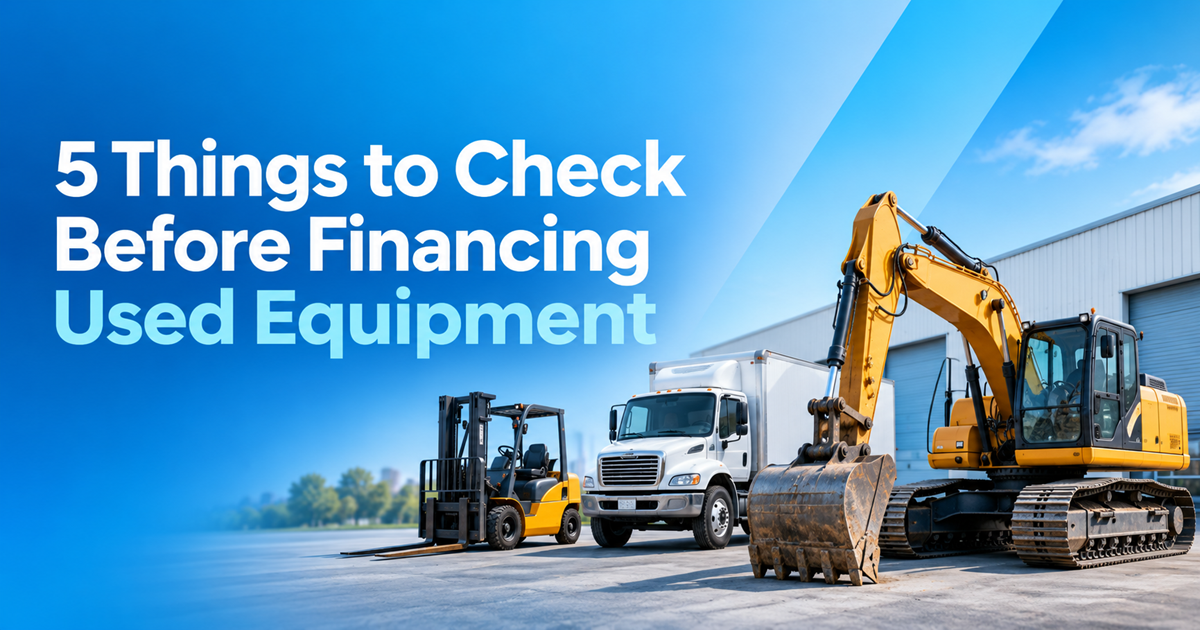
Businesses purchasing second-hand machinery should also consider equipment condition, age, maintenance history and lender requirements.
Read our guide on 5 Things to Check Before Financing Used Business Equipment in Australia for more information.
How Does Equipment Finance Affect Business Cash Flow?
Equipment purchases can reduce the cash available for wages, stock, operating expenses and unexpected costs.
Finance or leasing arrangements may help spread expenditure over time, but they also create ongoing financial commitments.
What Should Your Business Consider?
Before proceeding, consider the following:
- How much revenue the equipment is expected to generate.
- Whether repayments remain manageable during quieter business periods.
- Maintenance and insurance expenses.
- Existing business debts.
- Any deposit, balloon or residual payment.
- The total amount payable over the agreement.
If your business also requires funding for operational expenses, explore our business loan services.
Can You Claim Tax Deductions on Business Equipment?
Australian businesses may be eligible to claim certain deductions relating to equipment purchases, finance costs or lease payments.
The applicable tax treatment depends on the finance structure, business use of the asset, GST registration and current taxation rules.
Purchased equipment may qualify for depreciation deductions or applicable small business depreciation concessions. Eligible lease expenses may also be deductible.
Further information is available through the Australian Taxation Office.
Can Self-Employed Business Owners Apply for Equipment Finance?
Yes. Tradies, sole traders, contractors and other self-employed business owners may be eligible for equipment finance, subject to lender assessment.
Documents Lenders May Request
Depending on the application, lenders may request:
- ABN and business registration details.
- Business bank statements.
- Business Activity Statements (BAS).
- Tax returns or financial statements.
- Equipment quotations or supplier invoices.
- Existing financial commitments.
Documentation requirements vary between lenders and finance products.
Uniko Capital helps self-employed Australians explore equipment finance options based on their business circumstances.
Five Questions to Ask Before Buying or Leasing Equipment
Before making a commitment, consider these questions:
The answers can help you compare available options beyond the advertised interest rate or monthly repayment.
Explore Equipment Finance With Uniko Capital
Whether you're purchasing construction machinery, upgrading trade equipment or investing in technology, the right finance structure should reflect how your business operates.
At Uniko Capital, we help Australian business owners, tradies and self-employed applicants explore equipment finance options and understand relevant lender requirements.
Speak with our Melbourne-based finance team to discuss your business needs, available finance structures and repayment commitments.
Find Equipment Finance That Suits Your Business
Planning to purchase or lease business equipment?
Speak with Uniko Capital to discuss available finance structures, lender requirements and repayment options for your business.
Uniko Capital – Finance Broker Melbourne
Head Office: Suite 304, 111 Overton Rd, Williams Landing VIC 3027
Branch Office: Unit 13/51-57 Merrindale Dr, Croydon South VIC 3136
Phone: 1300 0 UNIKO
Email: admin@unikocapital.com.au
Australian Credit Licence: 577377
This article provides general information only and does not consider your individual financial circumstances. Finance is subject to lender eligibility, credit assessment, terms and conditions. Seek professional financial and tax advice where appropriate.
Frequently Asked Questions
Is it better to buy or lease business equipment?
Buying may suit businesses that need long-term ownership, while leasing may suit businesses that prefer lower initial expenditure or more frequent equipment replacement. The total cost and contractual conditions should also be considered.
What is the difference between a chattel mortgage and a finance lease?
With a chattel mortgage, the business generally owns the asset while the lender holds a security interest. Under a finance lease, the financier generally retains ownership during the lease period.
Can I finance second-hand business equipment?
Yes. Finance may be available for eligible used machinery, tools and commercial equipment, depending on lender requirements, asset condition and value.
Do I need a deposit for equipment finance?
Deposit requirements vary depending on the lender, equipment value, business financial position and finance structure.
Can equipment finance help preserve working capital?
Equipment finance may reduce the initial expenditure required to acquire an asset. However, businesses must account for ongoing repayments, interest, fees and other contractual commitments.